A name for this
town
Due to the large Joe and Tol Parker families,
the settlement was referred to as Parker Town from about 1897
to 1908. By 1908, the Rains store, a cotton gin, saw mill, shingle
mill, grist mill, two churches, and new school were present.
There must have been talk about giving the growing village an
"official" name. According to Joe Parker's granddaughter,
Mary Jo Grant, Parker urged locals to refer to the settlement
as Rainsville rather than Parker Town in honor of Will Rains
who built the first store.
The name "Rainsville" would stand
through the decades despite a development venture in 1911 -1915
that resulted in a temporary new name for the town - "Santileon
City."
Before 1913, word of a new rail route on
Sand Mountain started a great deal of speculation. An enterprise
known as Birmingham and Chattanooga Railroad Company surveyed
the mountain for a new track. The railroad was more than a rumor.
Headquartered in Boaz, the venture was incorporated on November
29, 1911. The survey on the new railroad "was progressing
rapidly notwithstanding the very bad weather we have been experiencing
of late and that the engineers were now about 35 miles north-east
of Boaz in the neighborhood of Chavies" (Sand Mountain
Record, Boaz, February 22, 1912). According to an article
in the April 16, 1913 edition of the Fort Payne Journal,
the rail company had acquired some "valuable right of way."
Advertisements promoting a new real estate development where
downtown Rainsville now sits claimed the railroad was under construction.
A rail bridge at Chattanooga was proposed, and then and welcomed
by the Hamilton County (TN) government. The article said the
Hamilton County Court of Commissioners had entered into a contract
with the new railroad to pay $15,000 per year to allow wagons
and foot passengers access to the future bridge across the Tennessee
River.
With rail service for the growing commercial
center at Rainsville, an economic boom seemed imminent. Perhaps
that's why a real estate company and some local residents resolved
that the town needed a catchy new name. They apparently chose
one in 1913 and started using it. The Fort Payne Journal featured
community columns for Santileon City between July 1913 and July
1914. During that year "Santileon City" was used instead
of "Rainsville" by the writer of that column on several
occasions. The baptist church was called Santileon City Church,
and games between a Santileon City baseball team and nearby squads
were mentioned a couple of times.
Any future railroad station and new maps
would feature the new name "Santileon City" rather
than Parker Town or Rainsville. It is not known where the name
came from, but Santileon City was plotted, and real estate auctions
to sell lots were planned.
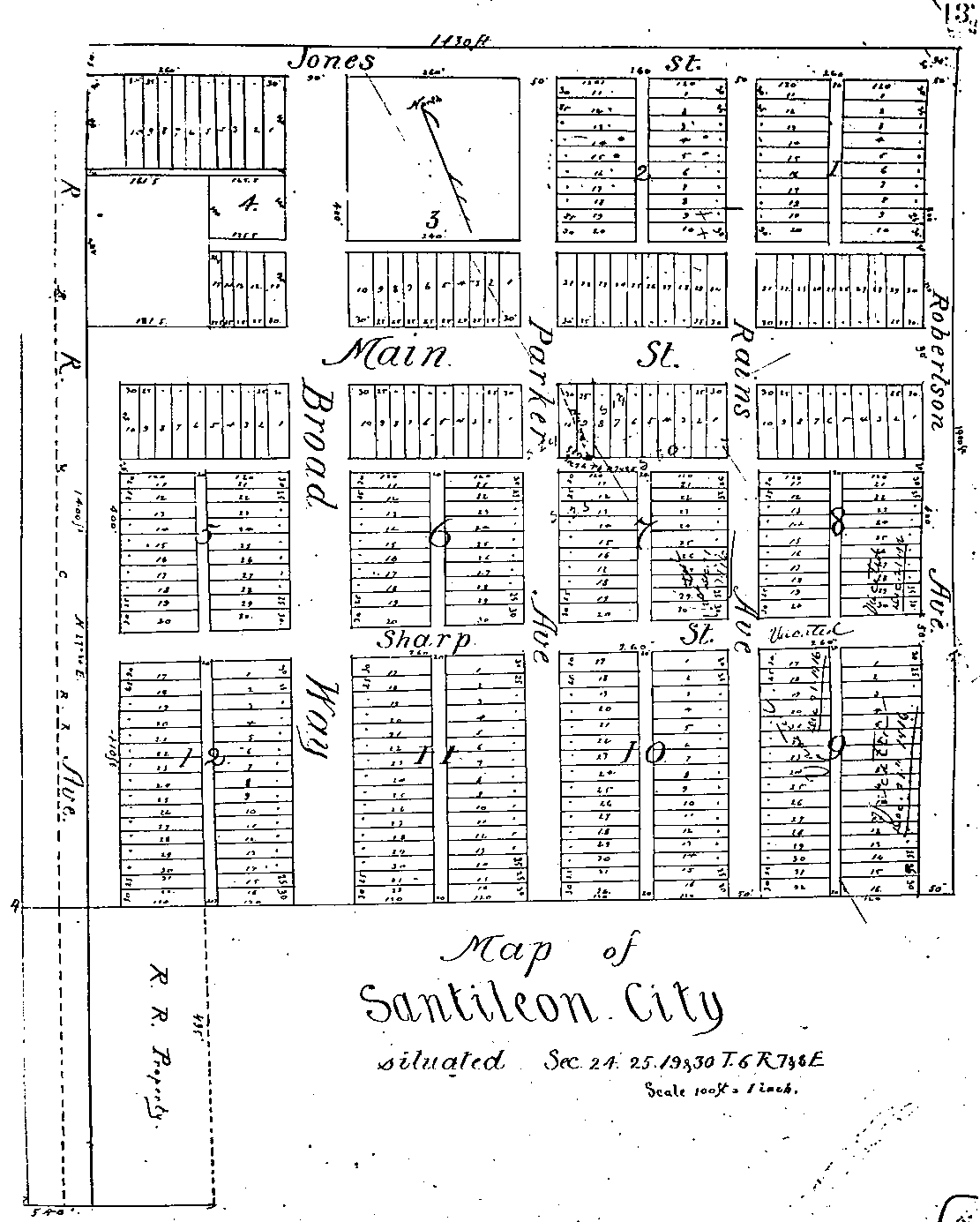
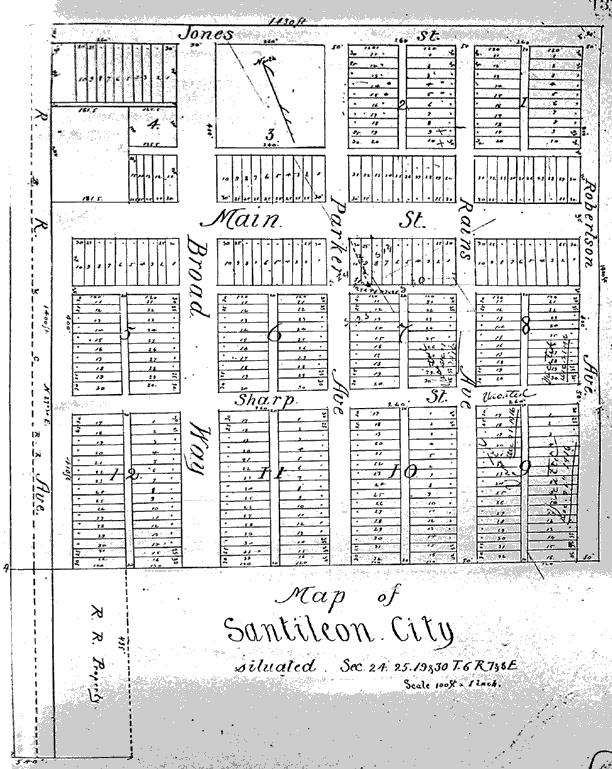
The 1913 map of Santileon City registered
at the county courthouse showed a neat, planned community complete
with the railroad on the west side with R & R Avenue, Broad
Way, Parker Avenue, Rains Avenue, and Robertson Avenue all running
parallel east of the proposed rail. Main Street, Jones Street
and Sharp Street are shown crossing the avenues at 90 degrees.
Each city block had its own alley as well. There were 333 narrow,
rectangular lots. The location of the proposed railroad station
appeared to be in the southwest corner of Santileon City.
But, most likely due to the prohibitive
cost of building a bridge down the northern slope of Raccoon
Mountain and across the river near Chattanooga, the new railroad
fell short of raising sufficient capital and never materialized.
The boom didn't happen, further speculation cooled, and by 1916
it was apparent locals preferred the name "Rainsville."
- not "Santileon City."
|
Heritage
Project Home
The Santileon City auctions
of 1914
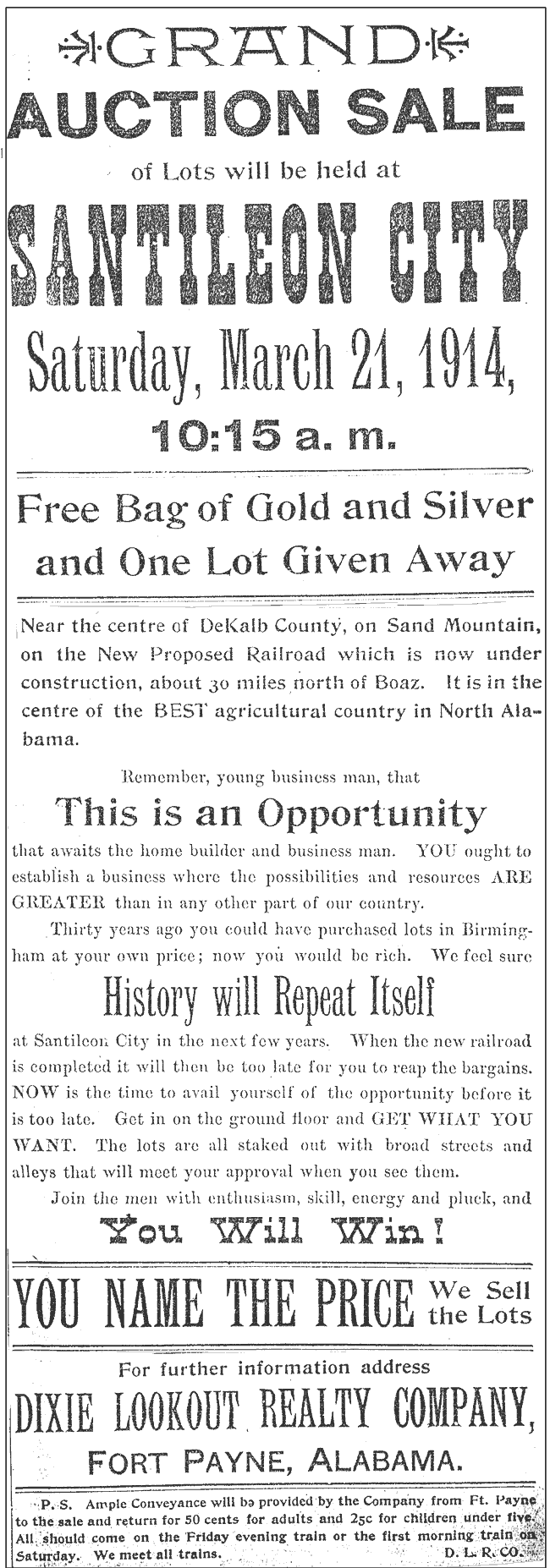
The Dixie Lookout Realty Company starting
promoting the proposed new town as the ready-to-boom commercial
center of a fertile agricultural district by April 1913. The
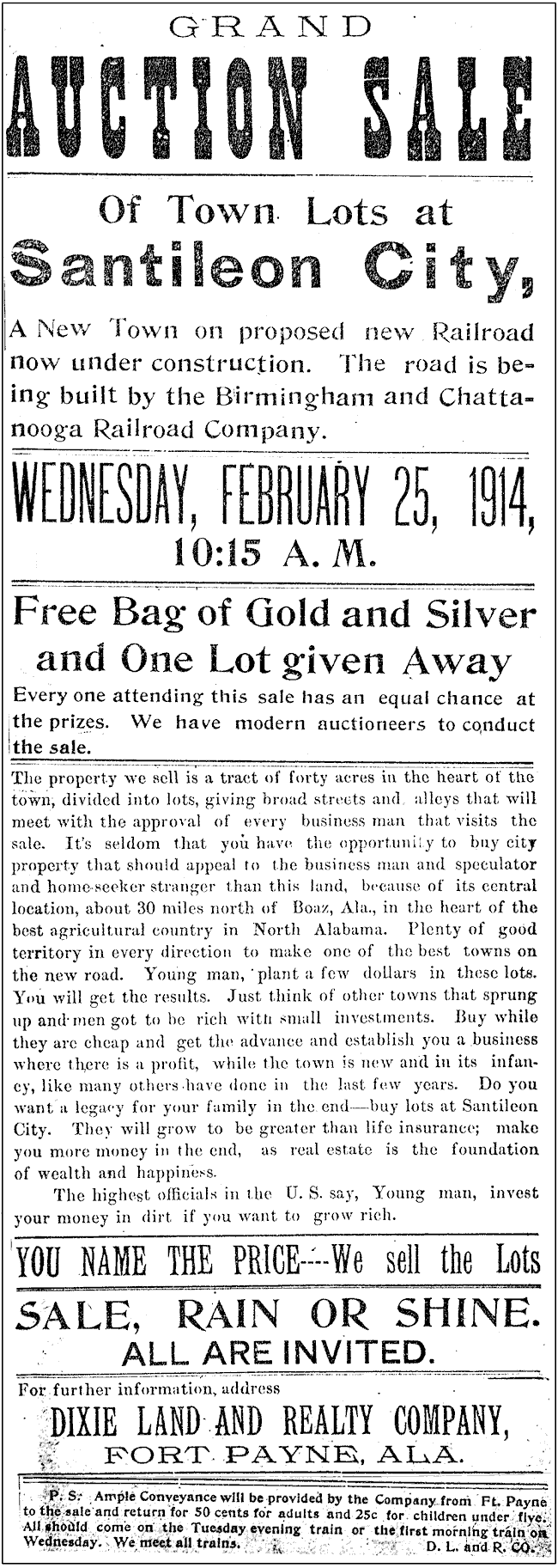
first "grand auction sale" of lots at Santileon City
was advertised heavily leading up to the event slated for Wednesday,
February 25, 1914. The real estate firm offered valuable door
prizes including a free bag of gold and silver, and a free lot.
(See
the advertisement from February 1914)
Although "about 500 persons awaited
the Auction Sale... it was thought advisable to postpone the
sale because of the heavy snow which covered the land making
it impossible for the lots to be seen" (Fort Payne Journal,
March 4, 1914). The auction was rescheduled for Saturday, March
21, 1914. (See
the advertisement from March 1914)
The results of that March 21 auction were
not reported in detail in the newspaper. But a related article
in May of 1914 stated the Dixie Lookout Realty Company had "just
closed a big deal in mountain lands" and "at the same
time interested eastern capitalists from the oil, gas and coal
fields of West Virginia" (Fort Payne Journal, May 6, 1914).
The capitalists were West Virginia politicians Stuart H. Bowman
and Tom B. Bowman of Huntington, West Virginia. The Bowmans were
interested in the prospects surrounding the proposed railroad,
and they apparently considered buying into the Santileon City
development. According to the article, the Bowmans had learned
about the proposed Sand Mountain railroad in a Baltimore, Maryland
publication, and Tom Bowman traveled to Chattanooga to meet with
railroad officials.
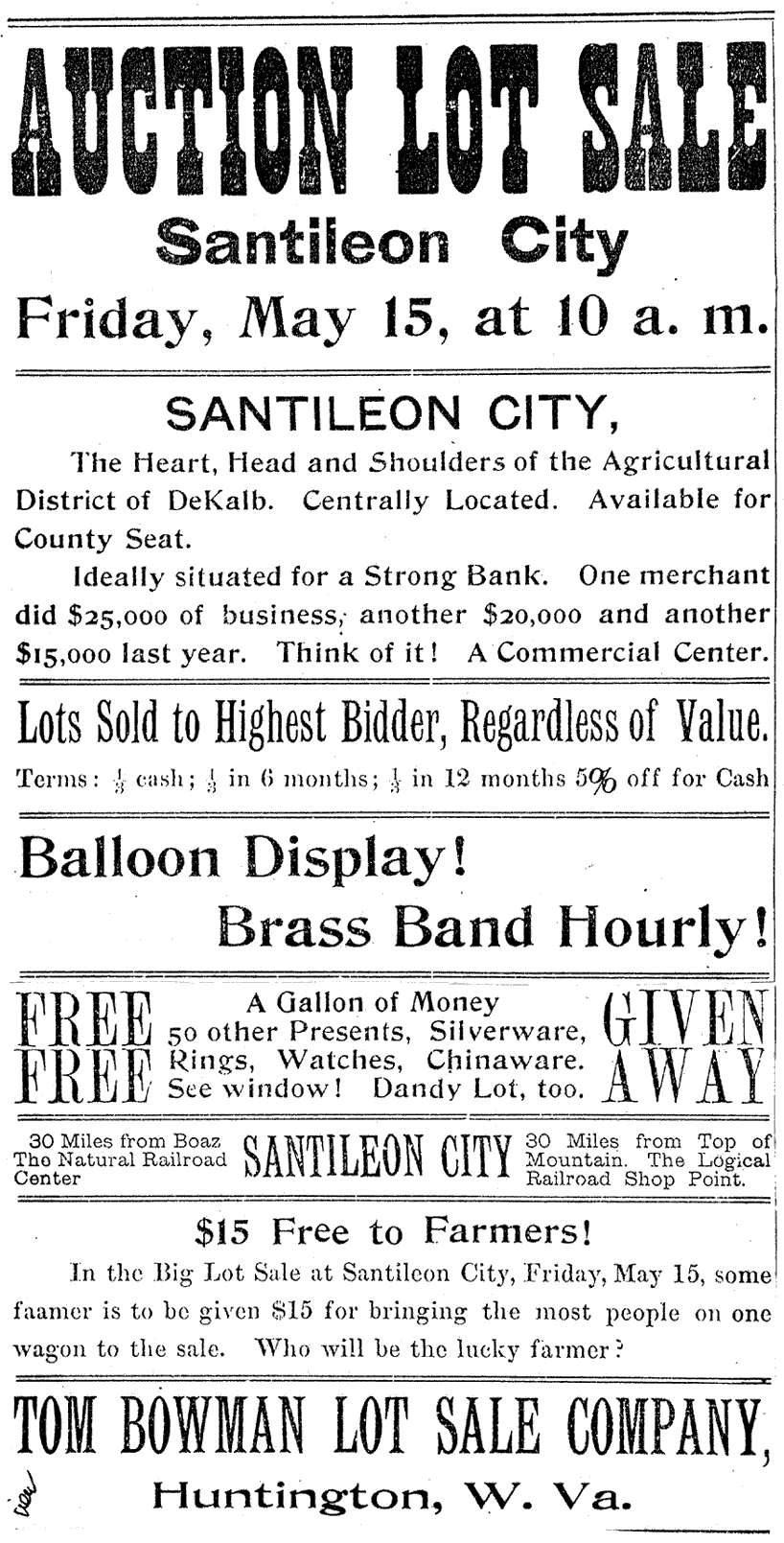
In that same issue, the Tom Bowman Lot
Sale Company advertised another "auction lot sale"
planned for Friday, May 15, 1914. It seems the West Virginians
helped spread the word about Santileon City on a larger scale,
and had struck a deal that would allow them to capitalize on
the development efforts. The advertisement described Santileon
City's potential, and listed auction terms. The auction festivities
would feature a balloon display, a brass band playing hourly,
and over 50 door prizes including a gallon of money, and a free
lot. A cash prize of $15 would be awarded to the farmer who brought
the most people to the auction on one wagon. (See
the advertisement for the May 1914 auction)
Zedikiah Arthur (Z.A.) Land won the contest.
His good fortune was reported in the newspaper a few weeks later.
Land transported 95 men to the auction on a 12 by 20 feet wagon
he prepared especially for the occasion. "He hauled the
load with four of his best mules, and beat his nearest opponent
by 14 men" (Fort Payne Journal, July 6, 1914).
It is not clear how the auction turned
out. But, if 500 people braved the snow to make it to the first
auction on a Wednesday in February, surely several hundred more
came on that Friday in May. After all, we know 95 men came on
one wagon, and 81 came on another. It is believed very few lots
were sold and ownership of most of the property remained with
the previous owners.
According to courthouse records that accompanied the Santileon
City map - the property belonged to N.A. Robertson, J.C. Dawson
and Joe F. Parker. The lots given away as door prizes may have
been bought back later, or won by a member of one of those families.
(Santileon
City map )
The May 20, 1914 edition of the Fort Payne
Journal featured an advertisement by the Worthy Development Company
for a sale of lots on 40 acres on the new railroad in Sylvania
(which was about four miles north of Santileon City). Similar
advertisements for a lot sale in Crossville, which was about
13 miles to the south, appeared that spring, as well.
But the ads must not have attracted much
outside interest, and the Sand Mountain residents - who were
almost entirely simple, hard working farmers - must have had
little need for small lots in a new development by a railroad
track that may, or may not, be built.
|
|